
Criminal Court Cases in Atkinson County
Atkinson County Superior Court has felony jurisdiction, and the county clerk expressly says the office files both felony and misdemeanor cases. The clerk is the custodian to contact for the docket, filed charging paper, orders, disposition, judgment, and sentence. Juvenile matters also pass through the Superior/Juvenile office, but juvenile files are confidential rather than ordinary public case records.
Other courts keep distinct records. Atkinson Magistrate Court handles warrants, preliminary proceedings, and listed traffic matters. Pearson Municipal Court and Willacoochee City Court retain their own ordinance, traffic, citation, and municipal bench-warrant records. A city citation does not belong in PeachCourt by default. Start with the court that issued it.
Atkinson Clerk Files Both Case Levels
This county differs from places that direct all misdemeanors to a separate state court. The Atkinson Clerk of Superior Court says its office files felony and misdemeanor cases. That makes the Robert Avenue counter the sound fallback when the online index does not answer which court has a charge.
Superior Court Clerk
19 Robert Avenue West
P.O. Box 6
Pearson, GA 31642
912-422-3343
Fax: 912-422-7025
cynthia.dillingham@gsccca.org
Give the full name, approximate filing year, and case number when known. Ask about search, page, certification, and archive charges before ordering because the county page does not publish those fees.
Atkinson County Case Record Searches
The Georgia Courts E-Access directory routes Atkinson Superior Court users to PeachCourt. An account is required. The provider's gated controls and a sample Atkinson docket were not available for verification, so do not assume a public search supports date of birth, charge, or year filters.
- Open Georgia Courts E-Access and follow its Atkinson link to PeachCourt.
- Create or use an account, then search with the name or case number the interface accepts.
- Compare the court, filed charge, and party details. Do not match a private person by name alone.
- Read the docket entries and open only documents the account permits.
- Call the clerk for an older, unavailable, or certified record and request the exact docket or order needed.
| Field Label | Type | Required | Notes |
|---|---|---|---|
| Account | Registration | Yes | Georgia Courts states an account is required. |
| Party name | Unverified | Unverified | Confirm inside the current gated interface. |
| Case number | Unverified | Unverified | Use it with the clerk even if online controls differ. |
| Date or case type | Unverified | Unverified | No local sample was visible without registration. |
PeachCourt Versus Atkinson Clerk Counter
The PeachCourt service offers remote account access and is also the mandatory e-filing provider for Atkinson Superior Court. E-filing describes how papers enter the court. It does not promise that every document is free, indexed for public viewing, or open without redaction.
The physical clerk channel is better for certified copies, older material, files absent from the provider, and questions about what can be released. A written Georgia Open Records Act request can identify an existing administrative record, but the clerk's normal court-record process remains the direct route for a case file. The agency need not create a custom compilation.
The official directory screenshot source shows the statewide routing layer rather than a complete statewide case database.
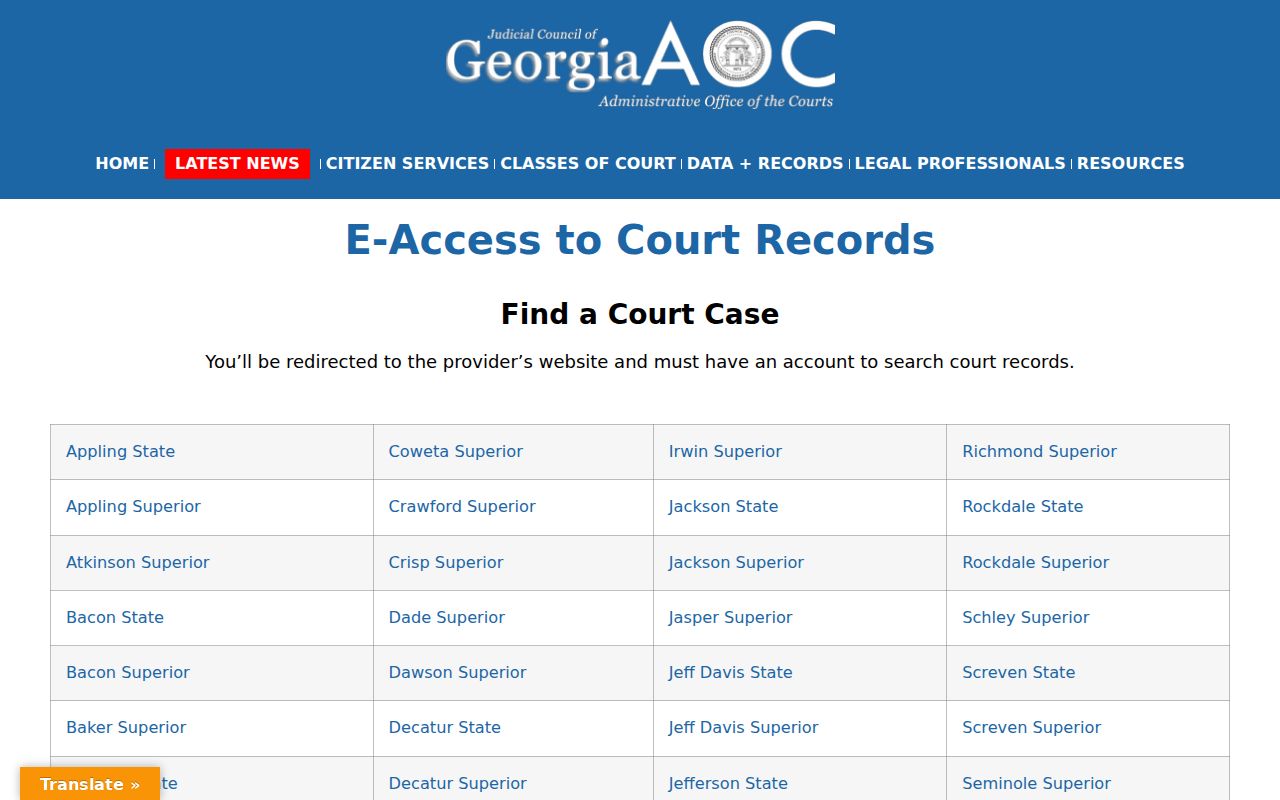
That routing structure explains why the Atkinson clerk remains essential when provider access stops at a login.
What a Criminal Case File Contains
An Atkinson County court file centers on the judicial case, not the jail intake. It can show which charge was filed, the order of hearings and motions, the outcome, and the court's sentence. Public copies may redact Social Security numbers and protected information about victims or minors.
| Case Number & Court | Identifies the local file and the court that owns it. |
|---|---|
| Charging Document | An accusation or indictment states the charge pursued after prosecutor review. |
| Docket Entries | The chronological register of filings, hearings, and orders. |
| Hearing Dates | Scheduled and completed court events, subject to later change. |
| Disposition & Judgment | Shows dismissal, nolle prosequi, acquittal, plea, verdict, or conviction. |
| Sentence & Conditions | Records punishment, supervision, costs, or restitution ordered by the court. |
Reading Atkinson County Case Outcomes
Outcome words must be read precisely. An arrest allegation alone cannot supply the result of a criminal court case.
- Dismissed
- The charge ended without a conviction.
- Nolle prosequi
- The prosecutor formally discontinued the charge at that time.
- Acquitted
- A judge or jury returned a not-guilty result.
- Convicted
- A judgment of guilt followed a plea or verdict.
- Disposition
- The final or current outcome recorded for a charge.
Use the actual docket and signed order. A statewide GCIC history can lag when a source agency has not reported a disposition, and GCIC cannot alter source data without documentation. Read each count separately because one case can contain a conviction on one charge and a dismissal or nolle prosequi on another. The sentence entry should also be matched to the correct count rather than assumed to apply to every original allegation.
The Georgia Felon Search interface illustrates a different product.
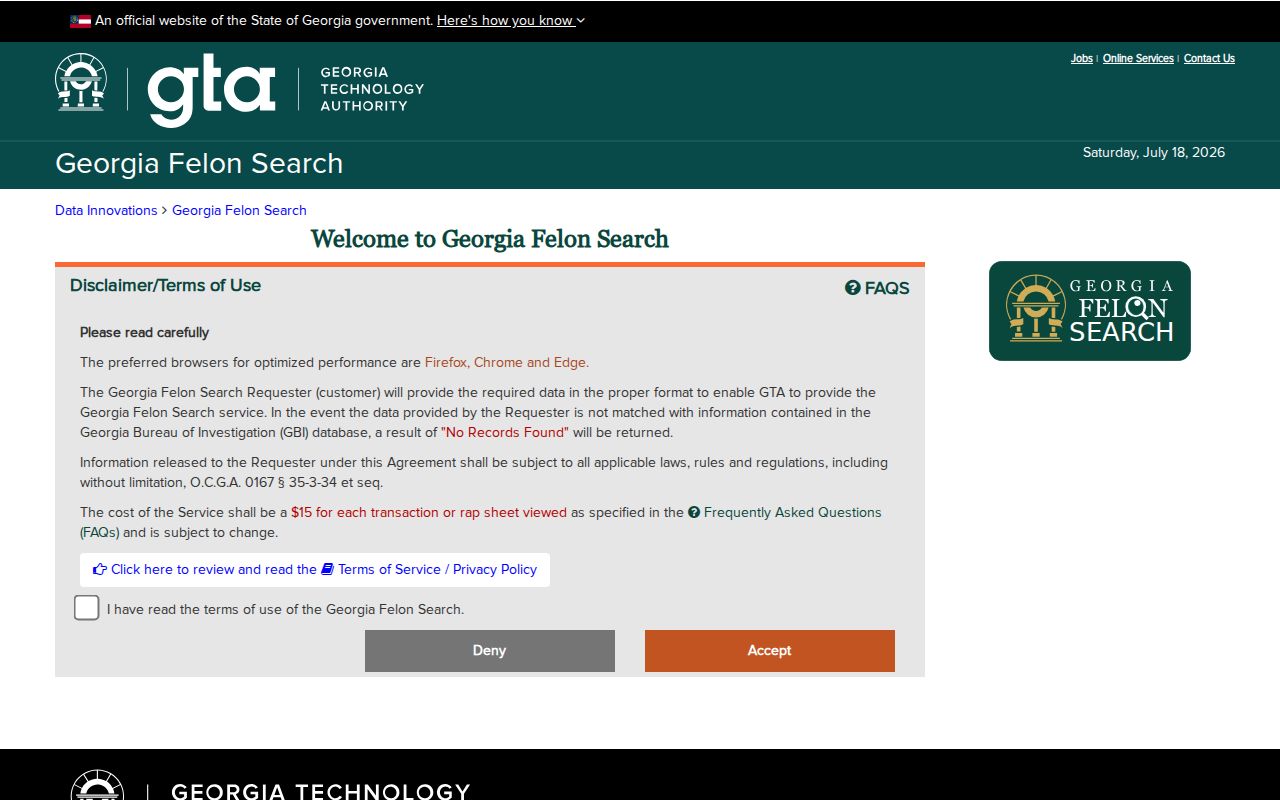
It reports possible Georgia felony-conviction matches, not the full Atkinson County docket or misdemeanor file.
Criminal Case Stages in Atkinson County
After a report or arrest, a judicial officer addresses custody and bond. The Alapaha Circuit prosecutor then reviews the allegation and may file an accusation, seek a grand-jury indictment, change the alleged statutory charge, or decline a count. Arraignment is where the filed charge is formally addressed and a plea is entered. Motions and discovery may follow before a plea or trial.
Case flow: Charges Filed › Arraignment › Pretrial › Plea or Trial › Disposition › Sentencing
An appeal or supervision record may follow, but neither replaces the trial-court judgment. No fixed local timetable was published, so verify dates on the live docket or with the clerk.
Atkinson Warrants Versus Superior Cases
Atkinson Magistrate Court handles warrants and preliminary proceedings at 717 North Main Street, 912-422-3552. A warrant authorizes an arrest or commands action. It is not the same as a filed Superior Court prosecution, and the warrant record may remain with the issuing court.
| Record | Main custodian | What it answers |
|---|---|---|
| Warrant or preliminary paper | Magistrate or issuing court | Why process issued and early judicial action |
| Superior Court docket | Clerk of Superior Court | Filed charge, events, outcome, and sentence |
| Municipal citation | Pearson or Willacoochee court | City ordinance or traffic matter |
For Willacoochee, call 912-534-5991. For Pearson, call 912-422-7411 because no current municipal search portal was verified.
Atkinson has no verified public active-warrant portal, mobile warrant search, most-wanted database, or statewide Georgia warrant search. A person checking a possible warrant should contact the sheriff at 912-422-3611, Magistrate Court, the Superior Court clerk, and any relevant municipal court. Ask the issuing court how to address the matter safely instead of appearing unannounced based on an unofficial name-only match. Sealed, juvenile, and unexecuted investigative warrants may not be public.
Access Rules for Case Records
Georgia law favors access to public records, but it preserves exemptions. The Georgia Open Records Act guide explains the usual three-business-day production or detailed-response rule. That period is not a promise that a large or archived request will be finished in three days. A denial should identify the specific exemption used.
Juvenile files, sealed court material, protected victim details, personal identifiers, and sensitive pending-investigation information can be closed or redacted. GCIC dissemination rules also limit access to statewide criminal-history information. Open Records cannot be used to bypass those rules.
Ask the Atkinson clerk whether the record is absent, archived, sealed, or indexed under a different case number before treating a blank online result as proof that no case exists.
Atkinson Docket Versus GCIC History
A court docket answers what Atkinson County filed and how the charge ended. A GCIC history aggregates identification, fingerprint-linked arrest cycles, reported dispositions, and Georgia custody data. They are related but not interchangeable. If a GCIC cycle lacks an outcome that appears in the signed county order, obtain a certified or otherwise acceptable source document and use GCIC's inspection and challenge procedure. The clerk cannot directly rewrite the state repository, and GCIC should not be asked to guess at a disposition without source proof. Keep a copy of the request, source order, payment, and response for later follow-up.
The GAPS fingerprint service is reserved for authorized statutory checks that use an agency service code.
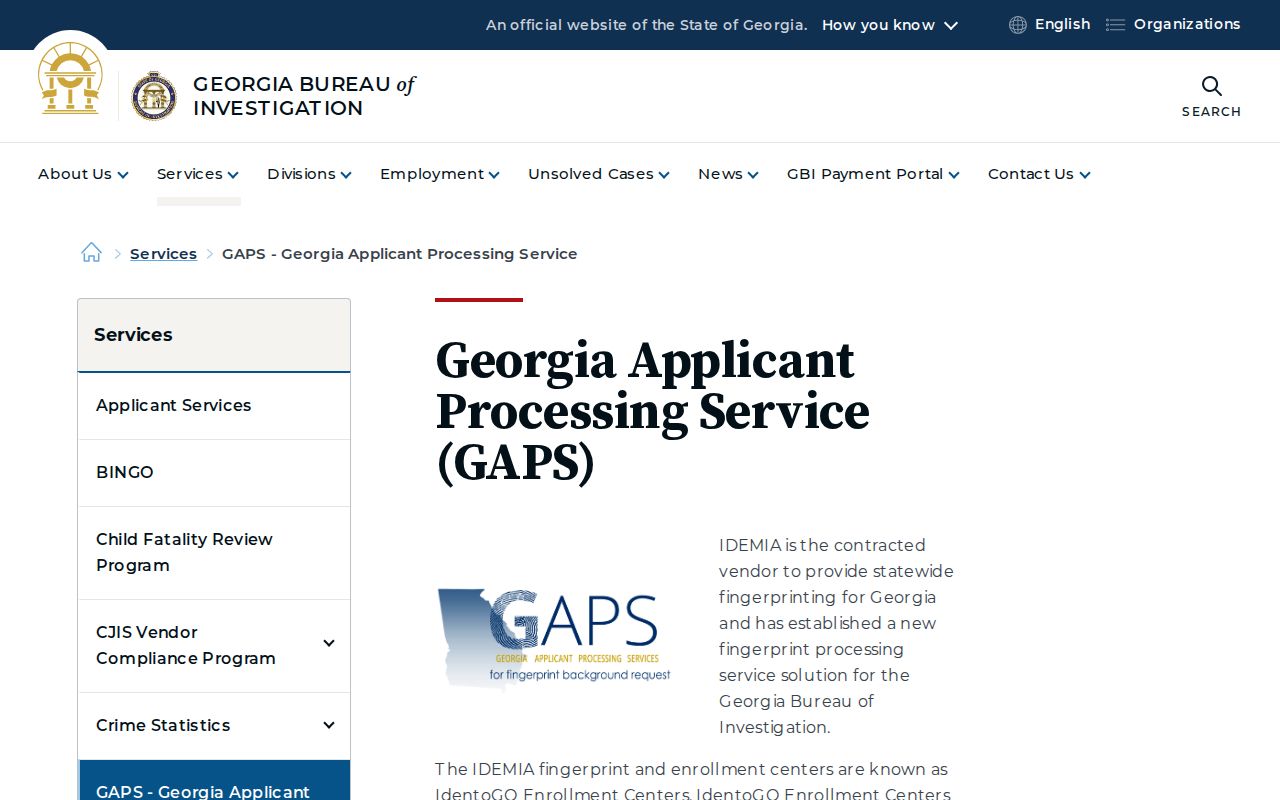
A GAPS response does not replace a certified Atkinson County judgment, and a docket search does not produce a fingerprint-confirmed statewide history.
The PeachCourt landing page is the assigned Atkinson court-provider source.
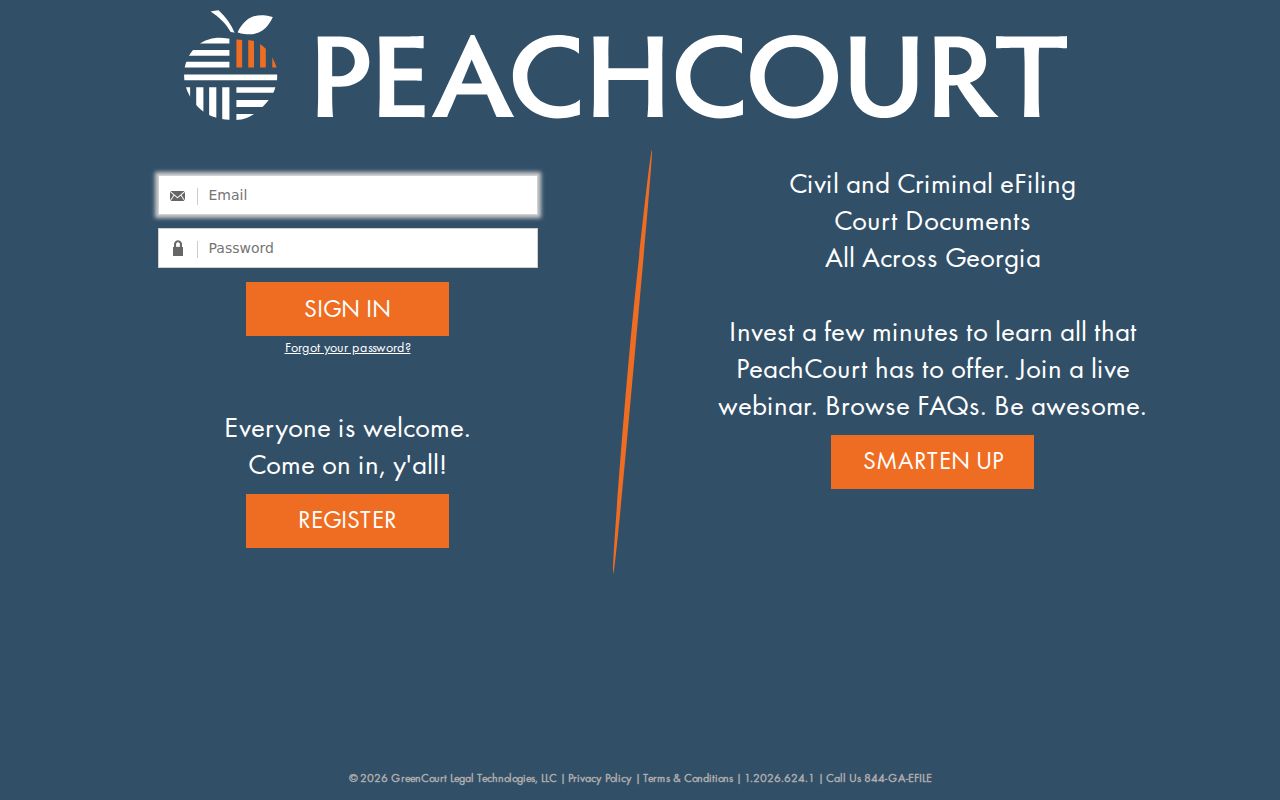
Its login boundary is why exact search fields and public document availability must be confirmed after account access.